
What is FUE?
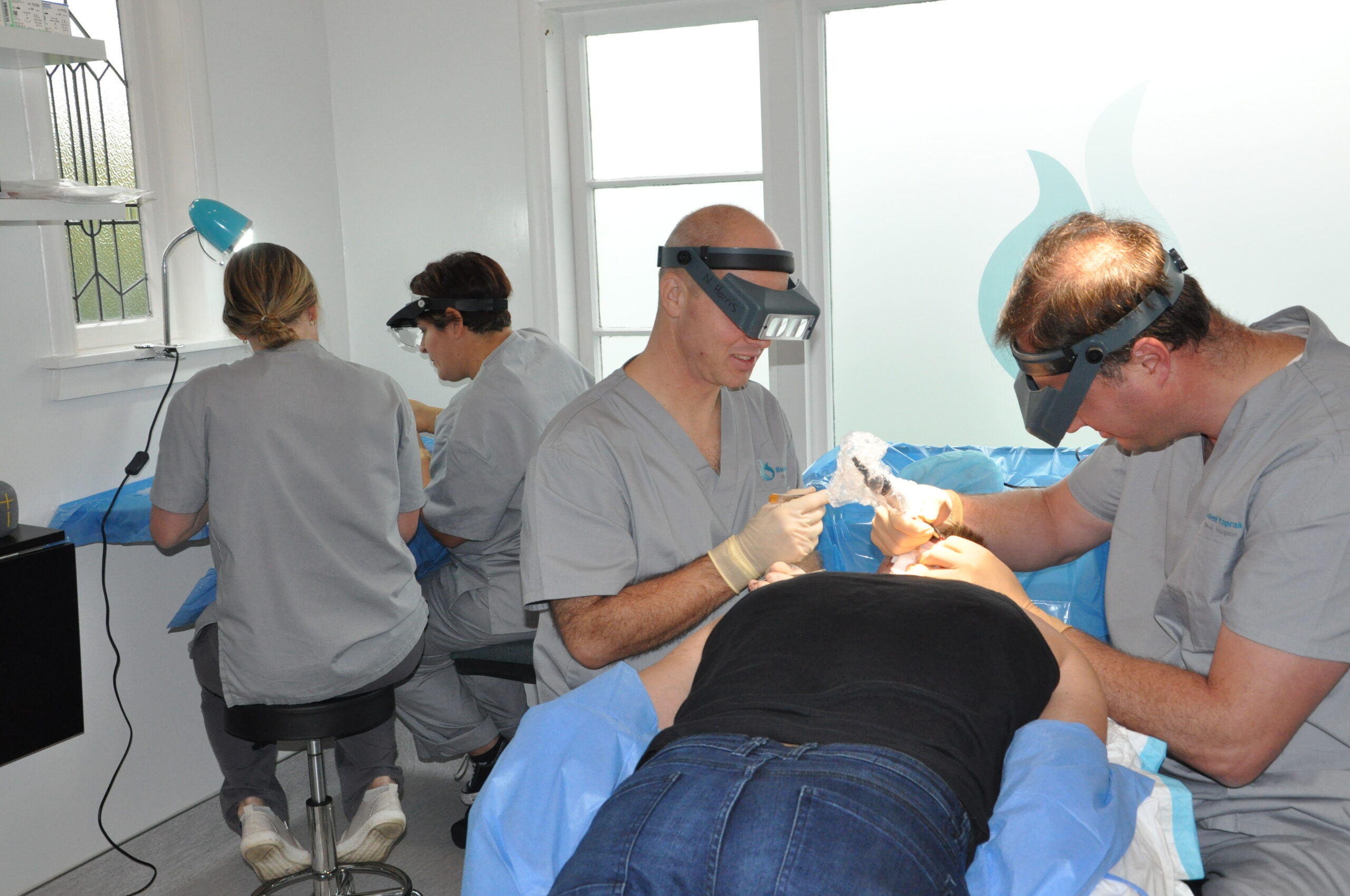
FUE stands for Follicular Unit Extraction. Instead of cutting a strip of scalp (as older FUT methods required), FUE uses precision micro-tools to extract individual hair follicles one at a time from the donor area — typically the back and sides of the scalp where hair is genetically resistant to hair loss.
Those follicles are then carefully implanted into the thinning or bald recipient areas, following the natural direction and angle of your existing hair. The result is permanent, natural-looking hair growth with minimal scarring.
At Yaprak Hair Clinic, every step of the extraction and implantation process is directed by Bülent Yaprak — a specialist plastic surgeon who understands tissue handling, anatomy, and aesthetics at the highest level.
FUE vs FUT — Key Differences
| FUE ✓ | FUT (Strip) | |
|---|---|---|
| Scarring | Minimal | Linear scar |
| Recovery | 7–10 days | 10–14 days |
| Short hair styles | ✓ Yes | Scar visible |
| Pain level | Low | Moderate |
Your Procedure Day — Step by Step
Hair transplant procedures at Yaprak Hair Clinic are performed in a single day at our rooms in Hamilton. It's a commitment — plan for a full, intensive day. Here's exactly what happens.
Arrive 8:30am. You'll be face-down on the procedure bed for extraction, then on your side, then sitting upright for implantation. Expect to finish between 4–6pm. It requires patience — but Bülent's team look after you throughout, lunch is provided, and there's a selection of movies to get you through. Most patients are genuinely surprised by how manageable the day is.
You arrive at 83c Tristram Street. Final hairline design is confirmed with Bülent — a collaborative discussion, not a template. Your hair is shaved on-site (please don't shave it yourself beforehand — this gives Bülent the most accurate assessment of your hair loss and graft placement).
Local anaesthetic is applied to donor and recipient areas. There's a brief stinging sensation during injection — after that, you're comfortable for the rest of the day. This is not a general anaesthetic — you're awake, alert, and able to watch movies throughout.
You lie face-down while Bülent extracts individual follicles from the donor area at the back of your scalp using micro-punch tools. This is the first half of the procedure. Each follicle is handled with precision — graft survival depends on it.
The team arranges lunch for you — please let us know of any dietary requirements beforehand. There are no food or drink restrictions before the procedure either, so eat normally on the morning of your appointment.
Once all grafts are harvested, you sit upright for the implantation phase. Bülent places each follicle into the recipient area at the correct angle, direction, and depth to match your natural hair pattern. This phase is where his plastic surgery training makes the real difference.
You're reviewed before leaving and given detailed aftercare instructions. Bülent's nurse checks your grafts and inspects the donor site the following morning. You'll receive written post-op instructions tailored to your procedure.
📋 How to Prepare for Procedure Day
Before the procedure
- ✓Wear a button-up shirt (avoids disturbing grafts when changing)
- ✓Comfortable, warm trackpants or similar
- ✓Eat and drink normally beforehand — no fasting needed
- ✓Do NOT shave your own hair — we handle this on the day
- ✓If you smoke: aim to reduce or stop 4 weeks before and after
- ✓Purchase baby shampoo beforehand for post-procedure hair washing
For the night after
- ✓Get a travel pillow — helps keep your head still while sleeping
- ✓Place a towel under your head for the first 2–3 nights
- ✓Extra pillows for sleeping — head elevated at all times for the first week
- ✓Avoid bending forward — causes pressure on the grafts
- ✓Minimise activity for 10–14 days — grafts are fragile
- ✓Swelling peaks days 3–5 (including forehead) — completely normal
Recovery & Growth Timeline
Hair transplant results take time — and that's normal. Here's what to expect, day by day and month by month.
Redness, scabbing, and swelling — including the forehead. Swelling peaks at days 3–5. Keep your head elevated at all times. Sleep with extra pillows. Avoid bending forward. Do not touch the grafted area.
Scabs fall away. Grafts remain fragile — minimise all activity. Wear button-up shirts to avoid disturbing the area. A hat can be worn from 48 hours to conceal scabbing if needed.
Transplanted hairs shed — this is called shock loss, and it's completely normal. The follicles remain intact. This stage alarms many patients; it shouldn't. It's expected and temporary.
The quiet phase — not much visible yet, but healing is underway beneath the surface. The follicles are preparing to produce new growth.
New growth begins — fine at first, then progressively thicker and denser. Visible improvement becomes clear to others from around 6 months.
Full result visible. Transplanted hair is permanent — genetically resistant to the DHT process. It can be cut, coloured, and styled exactly like your natural hair.
Why Not Just Go to Turkey?
Turkey is the world's hair transplant capital — and that's exactly where Bülent trained. The skills and techniques he uses come from Istanbul, and he returns regularly to train alongside Turkish and international surgeons.
But here's the practical reality of combining surgery with international travel:
- ✕You need to fly immediately before and after surgery
- ✕All follow-up care requires another international trip — or none at all
- ✕If a complication arises, your surgeon is 12,000km away
- ✕Surgeon qualifications and standards vary enormously
- ✕No MCNZ registration — no local accountability if results disappoint
With Yaprak Hair Clinic in Hamilton
- ✓Istanbul-trained surgeon — the same expertise, locally
- ✓Follow-up appointments included — no extra trips needed
- ✓If you have a concern, Bülent is minutes away
- ✓Specialist plastic surgeon — FEBOPRAS certified
- ✓MCNZ vocationally registered — full accountability
 FEBOPRAS
European Board
 ISHRS
ISHRSFull Member — NZ First
 NZAPS
NZAPSNZ Plastic Surgeons
 ASAPS
ASAPSAesthetic Surgery
 ANZBCPS
Board Certified 2025
FUE Questions Answered
Find Out If FUE Is Right for You
Send photos of your hair loss via our contact form and Bülent will give you an honest, personalised assessment. Consultation $267.
Book a Consultation →